

models
Vespa 125 Primavera ET3, and 125 ET3 (VMB1T)
The 125 Primavera was upgraded in 1976 to produce the 125 Primavera ET3. The compression ratio went up and the cylinder gained a 3rd transfer port. Electronic ignition, a larger main jet and a matt black "banana" exhaust remeniscent of the 90SS gave the ET3 a top speed of 90 km/h. The Primavera remained in production and was sold alongside the ET3 until 1983. To distinguish it visually from the Primavera it gained blue adhesive stripes on the front mudguard and rear cowls, and matt black finish for the engine fan cover, front shock cover and front suspension link cover. The headset gained an ignition key switch.
The 125 ET3 sometimes referred to as the "Estero" or Export model is listed by Piaggio as a different model, but it was almost identical to the Primavera ET3 and still featured "Primavera" on the rear badge, just not in the marketing literature. The main differences were a matt black fuel tank instead of body colour, floorboard strips on the central spine (like the smaller engined models) instead of a rubber mat, and it was available in more colours. The footbrake pedal changed to a PK type with a triangulated square casting below the floor, though this may have been a series production change to smallframes in general at some point. Most went to Japan where they also gained bar-end indicators. The model at the Piaggio museum also has different handlebar grips.
In Japan demand for vintage Vespa scooters was so high that it was profitable for Piaggio to restart production of classic smallframes from 1985 until 1999. Production finally stopped only upon the retirement of the specialists building them. In a special sector of the Pontadera factory a few thousand brand new "Vintage" smallframes (50s, 100 and 125ET3) were built exclusively for Narikawa of Japan, who were the sole Japanese Vespa distributor. They remained on sale until 2000.
These guides were produced in Japanese by Motorino Del Vento, a Japanese dealer. I originally copied them to this site in order to translate them because we only had Babelfish 20 years ago, and it didn't do popups. I've got rid of the popups now anyway. We all have bigger screens and more data these days. The original page is here
Purchase guide

The largest-engined scooter of the Vintage series has the same body size as the 50S, but the headlight shell (around the headset) is slightly larger. Equipment is luxurious compared to the 100, with ignition key, side locker, sports silencer, CDI ignition, and so on.
It has aluminium brake drums which allow firm braking, but which are still not that effective. There is respectable power with a top speed of approximately 90km/h. Brisk performance is possible if the 4 speed gearbox is used well.
However, because the big engine is mounted to the very limit of clearance between the cylinder head and the body, over a bumpy road there are times when the spark plug cap can be broken. Care is especially necessary when carrying two riders.
The clutch is heavy compared to the 100 because it has a stronger spring.
4 gears make sporty driving possible, but it can be more difficult to shift accurately, because the gear spacing is smaller and you can select the wrong gear.
In conclusion, if you're looking for sportiness, you probably want the ET3.
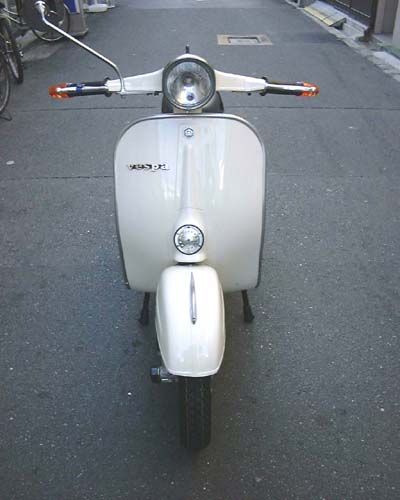
Front view
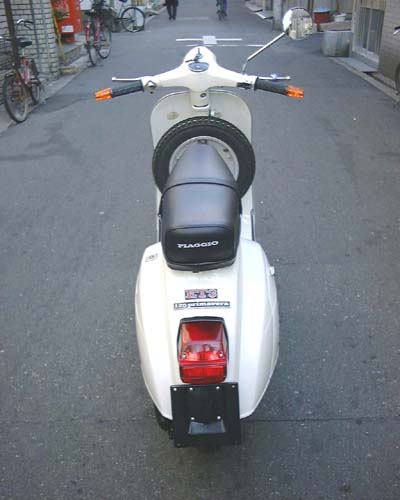
Rear view
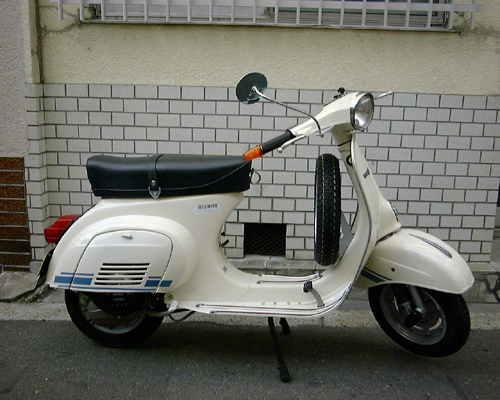
Right hand side
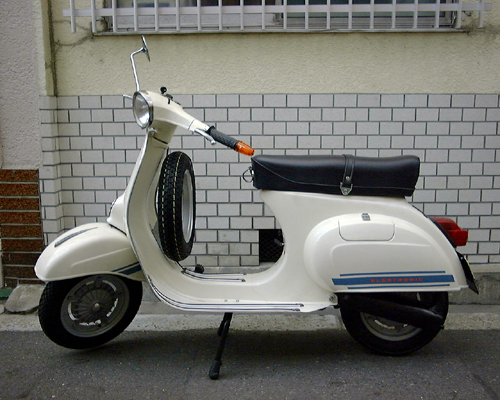
Left hand side
Side locker

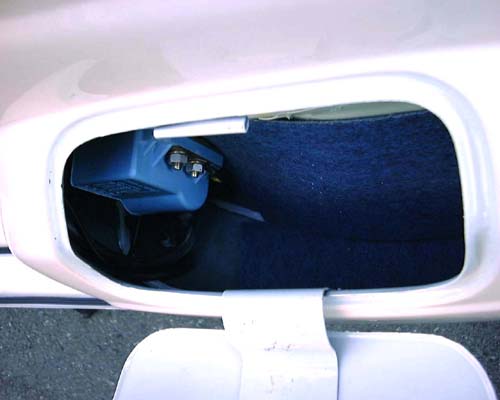
The ET3 has a storage locker on the left side. It is lined with blue carpet to reduce exhaust heat, and is big enough to hold, say, an A-Z, a pair of goggles, small tools, etc. In addition the CDI unit is located in it.
Headlight
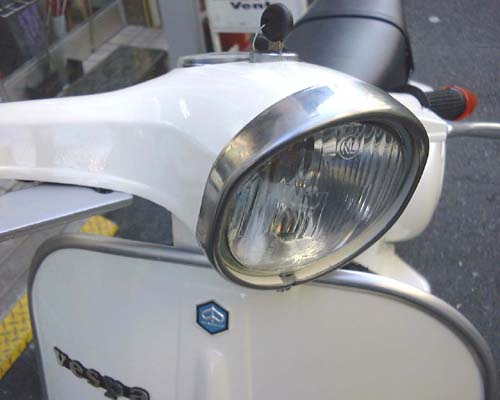
When you compare the headlight of the ET3 with the 50S and 100 you'll see a bright headlight rim. Also because the headlight shell is slightly more angular the handlebars are 1cm wider. The headlight rim is fitted only to the ET3.
Engine


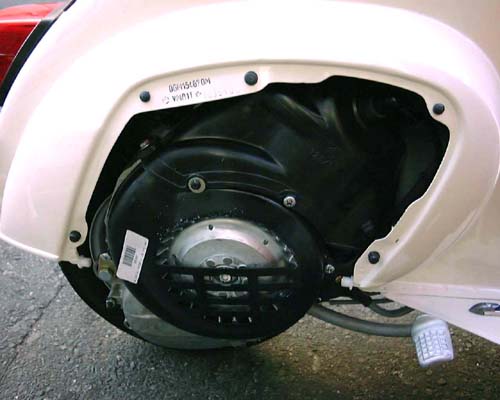
As expected the ET3 engine has a bigger piston compared to the 50S. Also it uses long stud bolts that go all the way through the cylinder. Furthermore, the design of the ignition is different from the 50s and 100.
Speedometer
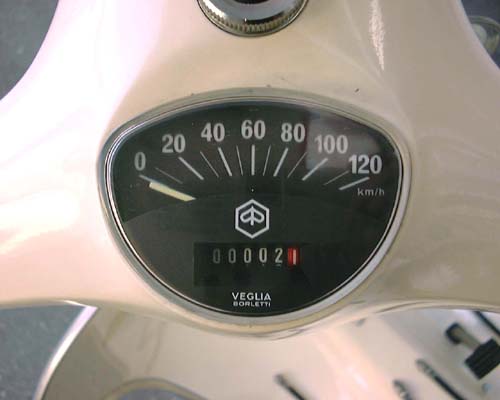
The speedometer of ET3 is the same shape as the Rally and Sprint. In the past it was the same part, but though recent models have the same shape the speedometer itself is now all plastic, and the speedometer cable attachment changed from screw to socket type. Note that it is possible to deform or break the plastic body due to overtightening the attachment screw. Also this speedometer is even visible after dark.
Ignition key
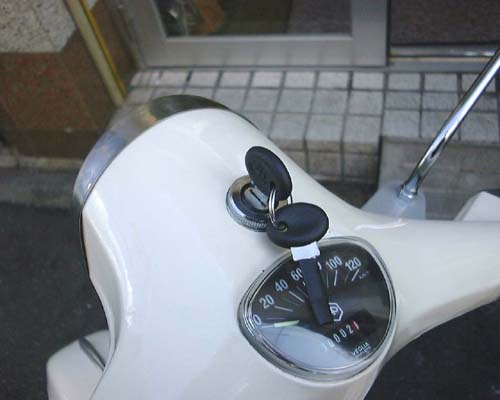
In front of the speedometer is the ignition socket. Here the ET3 differs from the 50s. When a key fob made of metal or similar is attached to the ignition key it is possible for the surrounding paintwork and the speedometer to become scratched if you don't take care.
Steering lock
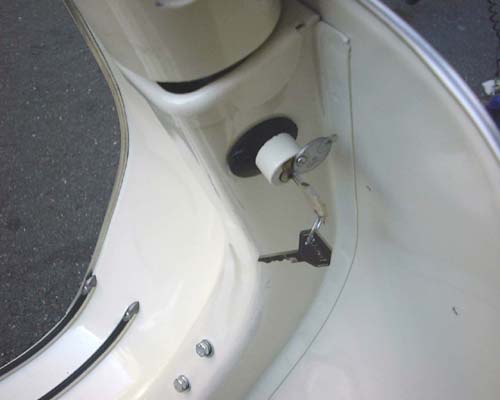
The steering lock is shared with the 50S and the 100. However, in the case of the ET3 it uses the same key as the side locker.
Front mudguard
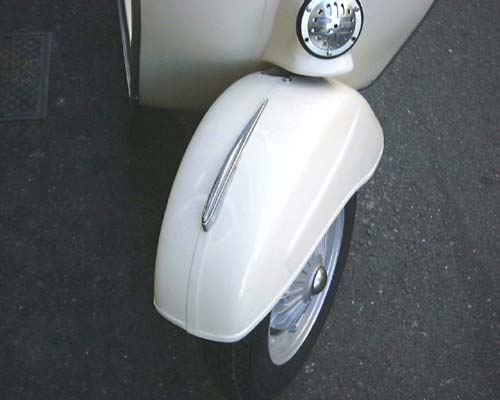
The front mudguard form is common, but a crest has been attached. Being able to order with the part, it is possible to attach one also to the 50s and 100.
Brake
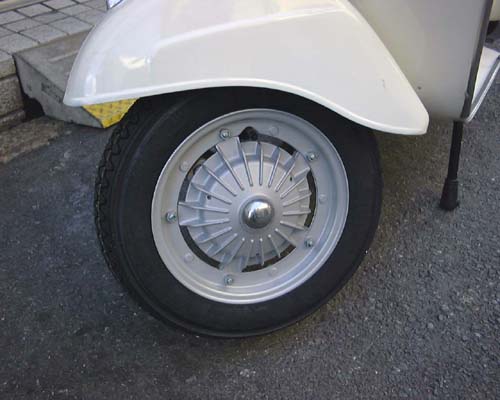
The Brakes of the ET3 are different from the 50s and the 100. The steel hub is replaced with aluminium, fluted to aid air-cooling. This means the brakes will work well at high speeds. The wheel is now just the rim, bolted to the aluminium hub. They are same ones as on the Rally etc.
Gearchange
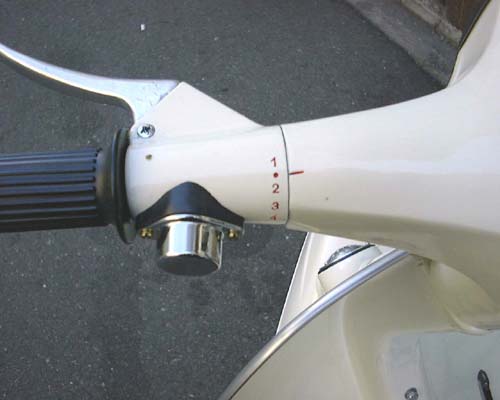
The ET3 has 4 gears. This means you have sportier acceleration and a higher top speed. However, compared with the 50S or the 100 the clutch is rather heavy, so town traffic can be tiring. Note also the switch fitted to Japanese market Vespas. This is the direction indicator switch.
Silencer

A sports type silencer is fitted to the ET3. This is the same type as the Vespa 90ss and 50ss. The silencer obstructs the rear wheel, so it is detachable by undoing two bolts at the rear of the scooter.
Horn
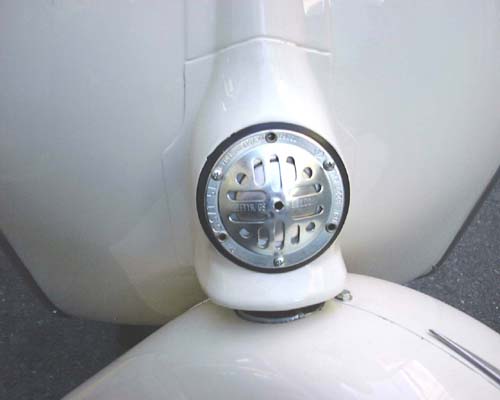
This is the same horn cover as the 50s.
Rear
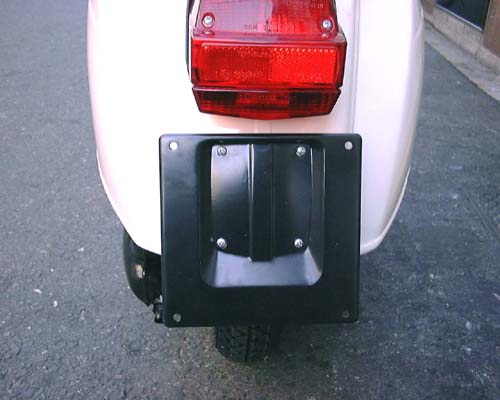
Although the rear number plate mounting is the same as the 50s and 100 it is painted black rather than the body colour. The tail lamp is common with the 50s and 100.
Front
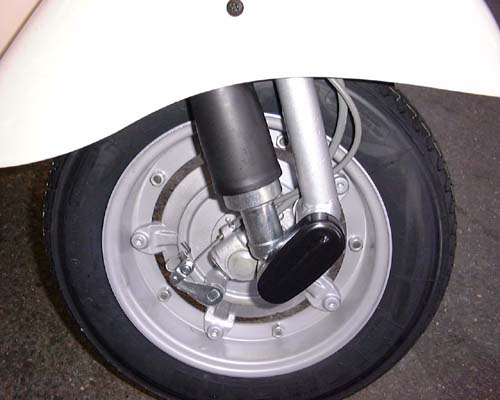
The front shock cover and the hub cover for the ET3 is black rather than aluminium. The suspension is common with the 50s and 100.
Seat
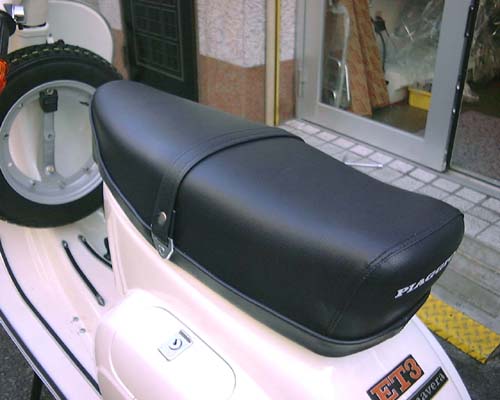
All of the Vintage series have the same type of seat. In Japan even the ET3 does not have a seat lock.
Spark plug
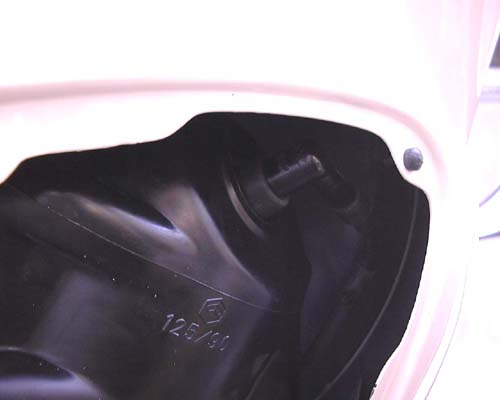
Perhaps it's just a little difficult to be visible, but the clearance of the spark plug cap and the body is small. Because of this, and the attendant risk of breaking the spark plug cap, when riding 2-up care should be exercised over bumpy roads.
Spare wheel
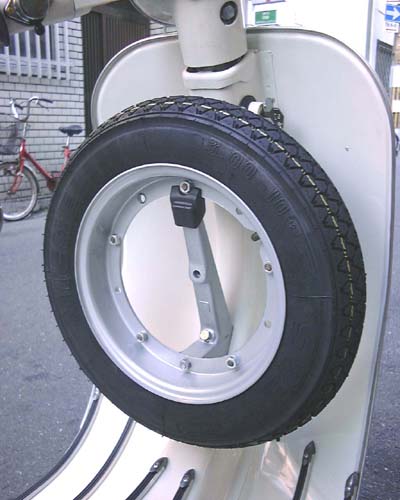
The spare on the ET3 is of course just a rim, rather than a full steel wheel. This is because of the aluminium hubs. You can also see the floor runners in this picture. The central "spine" has 2 short runners rather than the rubber mat fitted to European models.
Kick starter
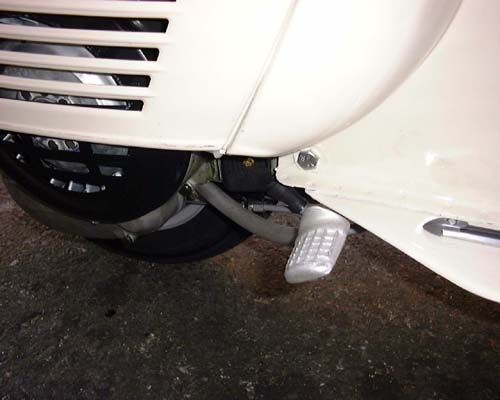
Kick starter. Compared with the 50s you need a fairly good kick to start the ET3 - although it's still not terribly hard. 2 or 3 kicks should be sufficient, even with no choke.
Fuel tap & choke
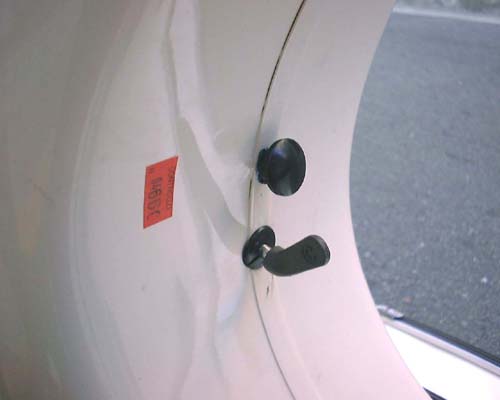
These are the same as the 50s and 100.
Down to the left is OFF.
Up is MAIN (about 4.5 litres).
Down to the right is RESERVE (about 1 litre).
Bag holder.
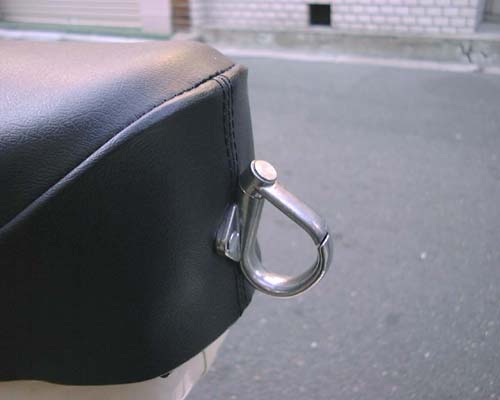
This should allow you to carry a small bag safely, with your legs providing side support. A backpack would still be better though.
Specification
| Type designation | VMB1T |
|---|---|
| Top speed | 90km/h |
| Engine | 121.16cc, bore 55mm, stroke 51mm, two-stroke, rotary valve, 3 transfer ports |
| Starting system | Kick starter |
| Ignition system | CDI contactless type magnetic flywheel 6v/60W |
| Lubricating system | Mixture |
| Fuel consumption | 50km/l (CUNA) |
| Tank capacity | 5.6l |
| Gear box | 4 speed grip controls |
| Tyre size | 3.00 x 10" |
| Total length / width / height | 1,665mm / 680mm / 1,015mm |
| Wheel base | 1,180mm |
| Weight | 78kg |
| Price | ¥405,000 (tax included) |
Incidentally, the ET3 is the scooter I bought over 20 years ago and still own.